
Fast Diet Plan: An Effective Way to Lose Weight Quickly

Introduction
In today’s fast-paced world, obesity and weight gain have become common health concerns. Unhealthy eating habits, lack of physical activity, stress, and excessive consumption of processed foods contribute significantly to weight gain. As a result, many people look for ways to lose weight quickly and effectively. One popular approach is following a fast diet plan.
A fast diet plan is designed to help individuals reduce body weight within a short period by controlling calorie intake, increasing nutrient-rich foods, and encouraging healthy lifestyle habits. While rapid weight loss can be motivating, it is important to approach dieting in a healthy and sustainable manner. This article explores the concept of a fast diet plan, its benefits, potential risks, and a sample diet plan for effective weight management.
What Is a Fast Diet Plan?
A fast diet plan is a structured eating program aimed at promoting quick weight loss by creating a calorie deficit. This means consuming fewer calories than the body burns each day. When the body receives less energy from food, it starts using stored fat as fuel, leading to weight loss.
Unlike crash diets that often eliminate entire food groups, a healthy fast diet plan focuses on balanced nutrition, including protein, fiber, vitamins, and minerals while reducing excessive sugars and unhealthy fats.
Principles of a Fast Diet Plan
1. Reduce Calorie Intake
Weight loss occurs when the body burns more calories than it consumes. A fast diet plan typically lowers daily calorie intake while ensuring the body still receives essential nutrients.
2. Increase Protein Consumption
Protein plays a crucial role in weight loss. It helps maintain muscle mass, boosts metabolism, and keeps you feeling full for longer periods.
Good sources of protein include:
- Eggs
- Chicken breast
- Fish
- Greek yogurt
- Lentils
- Beans
- Tofu
3. Eat More Fruits and Vegetables
Fruits and vegetables are low in calories and high in fiber. They help control hunger, improve digestion, and provide important vitamins and minerals.
4. Drink Plenty of Water
Water is essential for overall health and weight management. It helps flush toxins from the body, supports metabolism, and can reduce unnecessary snacking by promoting a feeling of fullness.
Experts generally recommend drinking at least 8–10 glasses of water per day.
5. Avoid Sugary Foods and Drinks
Sugary beverages, candies, cakes, and desserts contain large amounts of empty calories that contribute to weight gain. Eliminating or reducing these foods can significantly improve weight-loss results.
6. Stay Physically Active
Combining a fast diet plan with regular exercise increases calorie burning and improves overall fitness. Activities such as walking, jogging, cycling, swimming, and strength training can accelerate weight loss.
Benefits of a Fast Diet Plan
Rapid Weight Loss
One of the main advantages of a fast diet plan is noticeable weight loss within a relatively short period. This can boost motivation and encourage individuals to maintain healthier habits.
Improved Health
A healthy diet can help lower cholesterol levels, improve blood sugar control, reduce blood pressure, and decrease the risk of chronic diseases.
Increased Energy Levels
Consuming nutritious foods provides the body with high-quality fuel, leading to better energy levels and improved daily performance.
Enhanced Confidence
Losing excess weight often improves self-esteem and body image, helping individuals feel more confident in social and professional settings.
Better Eating Habits
Following a structured diet plan encourages healthier food choices and greater awareness of nutritional intake.
Potential Risks of Fast Dieting
Although fast diet plans can be effective, they should be approached carefully. Extreme calorie restriction may lead to several problems, including:
- Fatigue
- Weakness
- Dizziness
- Nutrient deficiencies
- Muscle loss
- Slower metabolism
For this reason, it is important to choose a balanced plan rather than a highly restrictive crash diet.
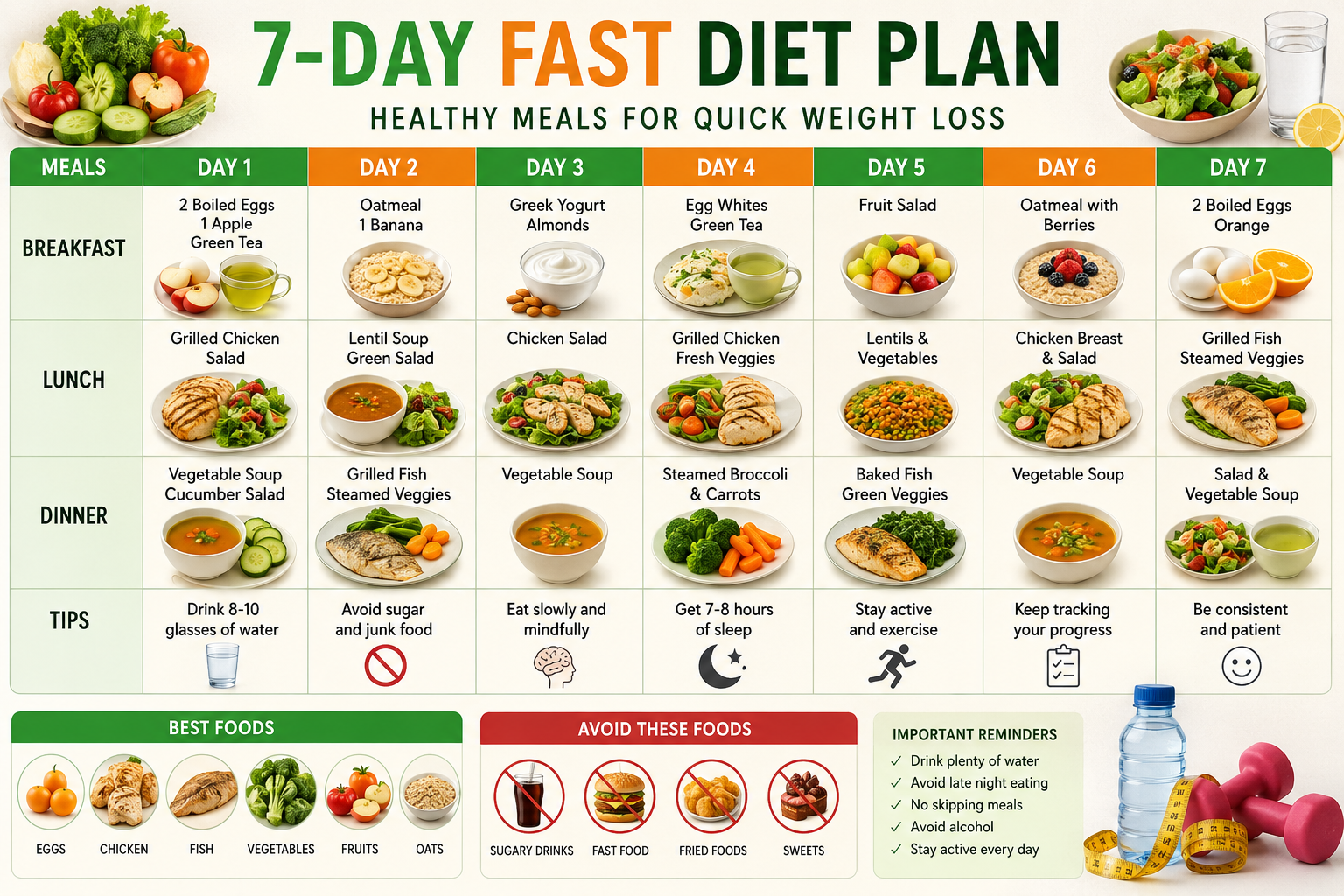
Sample 7-Day Fast Diet Plan
Day 1
Breakfast
- 2 boiled eggs
- 1 apple
- Green tea without sugar
Lunch
- Grilled chicken breast
- Mixed salad
Dinner
- Vegetable soup
- Cucumber salad
Day 2
Breakfast
- Oatmeal
- 1 banana
Lunch
- Lentil soup
- Green salad
Dinner
- Grilled fish
- Steamed vegetables
Day 3
Breakfast
- Greek yogurt
- Handful of almonds
Lunch
- Chicken salad
Dinner
- Vegetable soup
Day 4
Breakfast
- Egg whites
- Green tea
Lunch
- Grilled chicken
- Fresh vegetables
Dinner
- Steamed broccoli and carrots
Day 5
Breakfast
- Fruit salad
Lunch
- Lentils and vegetables
Dinner
- Baked fish
Day 6
Breakfast
- Oatmeal with berries
Lunch
- Chicken breast and salad
Dinner
- Vegetable soup
Day 7
Breakfast
- 2 boiled eggs
- Orange
Lunch
- Grilled fish with vegetables
Dinner
- Mixed salad and soup
Best Foods for Fast Weight Loss
Eggs
Eggs are rich in protein and help reduce hunger throughout the day.
Lean Meat
Chicken breast and turkey provide high-quality protein with relatively few calories.
Fish
Fish is rich in protein and healthy omega-3 fatty acids that support heart health.
Vegetables
Leafy greens, broccoli, cauliflower, and cucumbers are low in calories and high in nutrients.
Fruits
Apples, oranges, berries, and pears provide fiber and natural sweetness without excessive calories.
Oats
Oats are an excellent source of fiber and help keep you full for longer periods.
Yogurt
Low-fat yogurt supports digestion and provides protein and calcium.
Foods to Avoid
For better results, avoid or limit the following:
- Soft drinks
- Sugary beverages
- Candy and sweets
- Fast food
- Fried foods
- White bread
- Pastries
- Chips and snacks
- Processed foods
The Importance of Exercise
Diet alone may not produce the best results. Regular physical activity helps burn additional calories and improves overall health.
Recommended exercises include:
- Walking
- Running
- Cycling
- Swimming
- Strength training
- Jump rope
- Aerobic workouts
Aim for at least 30–45 minutes of exercise most days of the week.
Tips for Successful Weight Loss
- Eat slowly and mindfully.
- Drink water before meals.
- Get 7–8 hours of sleep every night.
- Avoid skipping meals.
- Control portion sizes.
- Stay consistent with your diet.
- Track your progress regularly.
- Manage stress effectively.
- Choose whole foods over processed foods.
- Stay motivated and patient.
Is a Fast Diet Plan Suitable for Everyone?
A fast diet plan may not be suitable for everyone. Pregnant women, breastfeeding mothers, children, older adults, and people with medical conditions such as diabetes, heart disease, or eating disorders should consult a healthcare professional before starting any weight-loss program.
Individual nutritional needs vary based on age, gender, activity level, and overall health. Therefore, a personalized approach often provides the best results.
Conclusion
A fast diet plan can be an effective way to lose weight and improve overall health when followed responsibly. The key to success lies in maintaining a balanced diet, staying hydrated, exercising regularly, and avoiding unhealthy eating habits. While rapid weight loss may be appealing, long-term success depends on adopting sustainable lifestyle changes rather than relying on extreme restrictions.
By focusing on nutritious foods, portion control, and consistent physical activity, individuals can achieve their weight-loss goals while maintaining good health and well-being. Remember that healthy weight loss is a journey, not a race, and lasting results come from patience, discipline, and commitment to a healthier lifestyle.