
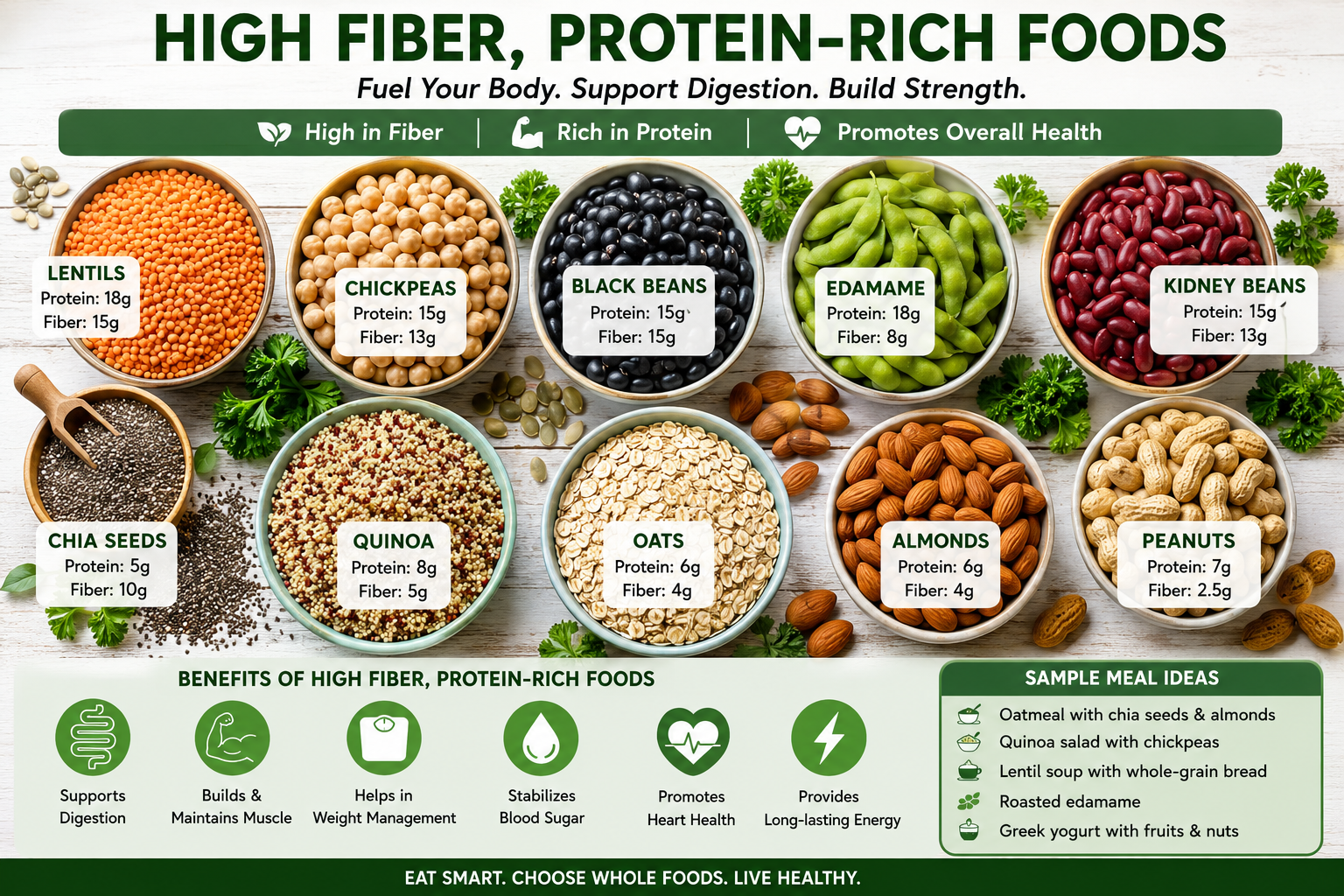
High-Fiber, Protein-Rich Foods: The Ultimate Guide to Better Health and Nutrition

Introduction
In today’s fast-paced world, maintaining a healthy diet has become more important than ever. Among the many nutritional components essential for overall well-being, fiber and protein stand out as two of the most important nutrients. Foods that are both high in fiber and rich in protein offer a powerful combination that supports weight management, digestive health, muscle growth, and long-lasting energy.
Whether your goal is to lose weight, build muscle, improve digestion, or simply adopt a healthier lifestyle, incorporating high-fiber, protein-rich foods into your daily meals can make a significant difference. This comprehensive guide explores the benefits, best food sources, and practical ways to include these nutritional powerhouses in your diet.
What Is Fiber?
Fiber is a type of carbohydrate found primarily in plant-based foods. Unlike other carbohydrates, fiber is not digested by the body. Instead, it passes through the digestive system, helping regulate bowel movements and supporting gut health.
Types of Fiber
Soluble Fiber
Soluble fiber dissolves in water and forms a gel-like substance. It helps lower cholesterol levels and stabilize blood sugar.
Sources include:
- Oats
- Beans
- Lentils
- Apples
- Chia seeds
Insoluble Fiber
Insoluble fiber adds bulk to stool and promotes regular bowel movements.
Sources include:
- Whole grains
- Nuts
- Vegetables
- Seeds
What Is Protein?
Protein is a vital nutrient responsible for building and repairing tissues, producing enzymes and hormones, and supporting muscle growth. It is made up of amino acids, often referred to as the building blocks of life.
Protein is essential for:
- Muscle development
- Immune function
- Energy production
- Healthy skin, hair, and nails
- Recovery after exercise
Why Combine Fiber and Protein?
Foods containing both fiber and protein provide exceptional health benefits because they work together to keep you full and satisfied for longer periods.
Benefits of High-Fiber, Protein-Rich Foods
1. Supports Weight Loss
Fiber and protein increase feelings of fullness, reducing hunger and unnecessary snacking throughout the day.
2. Improves Digestive Health
Fiber promotes healthy digestion and prevents constipation while supporting beneficial gut bacteria.
3. Stabilizes Blood Sugar
Protein slows digestion and fiber reduces rapid blood sugar spikes after meals.
4. Builds and Maintains Muscle
Protein supplies essential amino acids required for muscle growth and recovery.
5. Supports Heart Health
Many fiber-rich foods help lower bad cholesterol levels and reduce cardiovascular disease risk.
6. Provides Long-Lasting Energy
The combination of fiber and protein helps sustain energy levels and prevents sudden energy crashes.
Top High-Fiber, Protein-Rich Foods
1. Lentils
Lentils are among the best sources of both fiber and plant-based protein.
Per cooked cup:
- Protein: 18 grams
- Fiber: 15 grams
Benefits:
- Supports heart health
- Improves digestion
- Helps control blood sugar
2. Chickpeas
Chickpeas are versatile legumes used in salads, soups, and hummus.
Per cooked cup:
- Protein: 15 grams
- Fiber: 13 grams
Benefits:
- Promotes satiety
- Rich in vitamins and minerals
- Supports gut health
3. Black Beans
Black beans provide a powerful nutritional profile.
Per cooked cup:
- Protein: 15 grams
- Fiber: 15 grams
Benefits:
- Improves digestive health
- Supports healthy cholesterol levels
- Excellent for vegetarian diets
4. Chia Seeds
Chia seeds are considered a superfood due to their impressive nutrient content.
Per 2 tablespoons:
- Protein: 5 grams
- Fiber: 10 grams
Benefits:
- Rich in omega-3 fatty acids
- Supports hydration
- Enhances digestive health
5. Quinoa
Quinoa is a complete protein containing all nine essential amino acids.
Per cooked cup:
- Protein: 8 grams
- Fiber: 5 grams
Benefits:
- Gluten-free
- Supports muscle recovery
- Provides sustained energy
6. Edamame
Edamame are immature soybeans packed with nutrients.
Per cooked cup:
- Protein: 18 grams
- Fiber: 8 grams
Benefits:
- Supports muscle growth
- Rich in antioxidants
- Promotes heart health
7. Oats
Oats are one of the healthiest breakfast foods available.
Per cooked cup:
- Protein: 6 grams
- Fiber: 4 grams
Benefits:
- Supports heart health
- Helps lower cholesterol
- Provides long-lasting energy
8. Almonds
Almonds are a nutrient-dense snack option.
Per ounce:
- Protein: 6 grams
- Fiber: 4 grams
Benefits:
- Supports brain health
- Rich in healthy fats
- Helps control appetite
9. Peanuts
Peanuts offer an affordable and accessible protein source.
Per ounce:
- Protein: 7 grams
- Fiber: 2.5 grams
Benefits:
- Supports muscle maintenance
- Rich in antioxidants
- Provides healthy fats
10. Kidney Beans
Kidney beans are highly nutritious and filling.
Per cooked cup:
- Protein: 15 grams
- Fiber: 13 grams
Benefits:
- Promotes digestive health
- Supports weight management
- Provides essential minerals
Sample High-Fiber, High-Protein Meal Plan
Breakfast
- Oatmeal topped with chia seeds and almonds
- Greek yogurt
Mid-Morning Snack
- Apple with peanut butter
Lunch
- Quinoa salad with chickpeas and vegetables
Afternoon Snack
- Roasted edamame
Dinner
- Lentil soup with whole-grain bread
- Mixed vegetable salad
Evening Snack
- Handful of almonds
Tips for Increasing Fiber and Protein Intake
Start Your Day Right
Choose protein-rich breakfasts like oats, yogurt, eggs, or protein smoothies.
Include Legumes Regularly
Add beans, lentils, and chickpeas to soups, salads, and main dishes.
Snack Smart
Replace processed snacks with nuts, seeds, and roasted legumes.
Choose Whole Grains
Opt for quinoa, oats, brown rice, and whole-wheat products.
Stay Hydrated
Increasing fiber intake requires adequate water consumption to support digestion.
Common Mistakes to Avoid
- Increasing fiber too quickly
- Not drinking enough water
- Relying solely on protein supplements
- Ignoring whole-food sources of nutrition
- Skipping fruits and vegetables
Conclusion
High-fiber, protein-rich foods are among the healthiest choices you can make for your body. They support digestion, promote muscle growth, improve heart health, stabilize blood sugar levels, and help maintain a healthy weight. By incorporating foods such as lentils, chickpeas, black beans, quinoa, chia seeds, oats, and nuts into your daily meals, you can enjoy long-lasting energy and improved overall health.
Making small, consistent dietary changes can lead to significant health improvements over time. Start adding more fiber- and protein-rich foods to your plate today and experience the benefits of a healthier, more balanced lifestyle.